From scalp to sole: What kind of gua sha do you need today?
 9min
9min
 AI Summary
This summary was generated by AI. Please refer to the full article for accuracy.
AI Summary
This summary was generated by AI. Please refer to the full article for accuracy.
Gua sha tools are expanding beyond facial sculpting into head-to-toe wellness, with specialized designs for the scalp, neck and shoulders, legs and face. OLIVE YOUNG is organizing its curation around body parts and everyday needs, while exploring testers and formats such as a “Gua Sha Bar” to help customers understand and choose among products. The shift reframes gua sha as a companion for daily care.
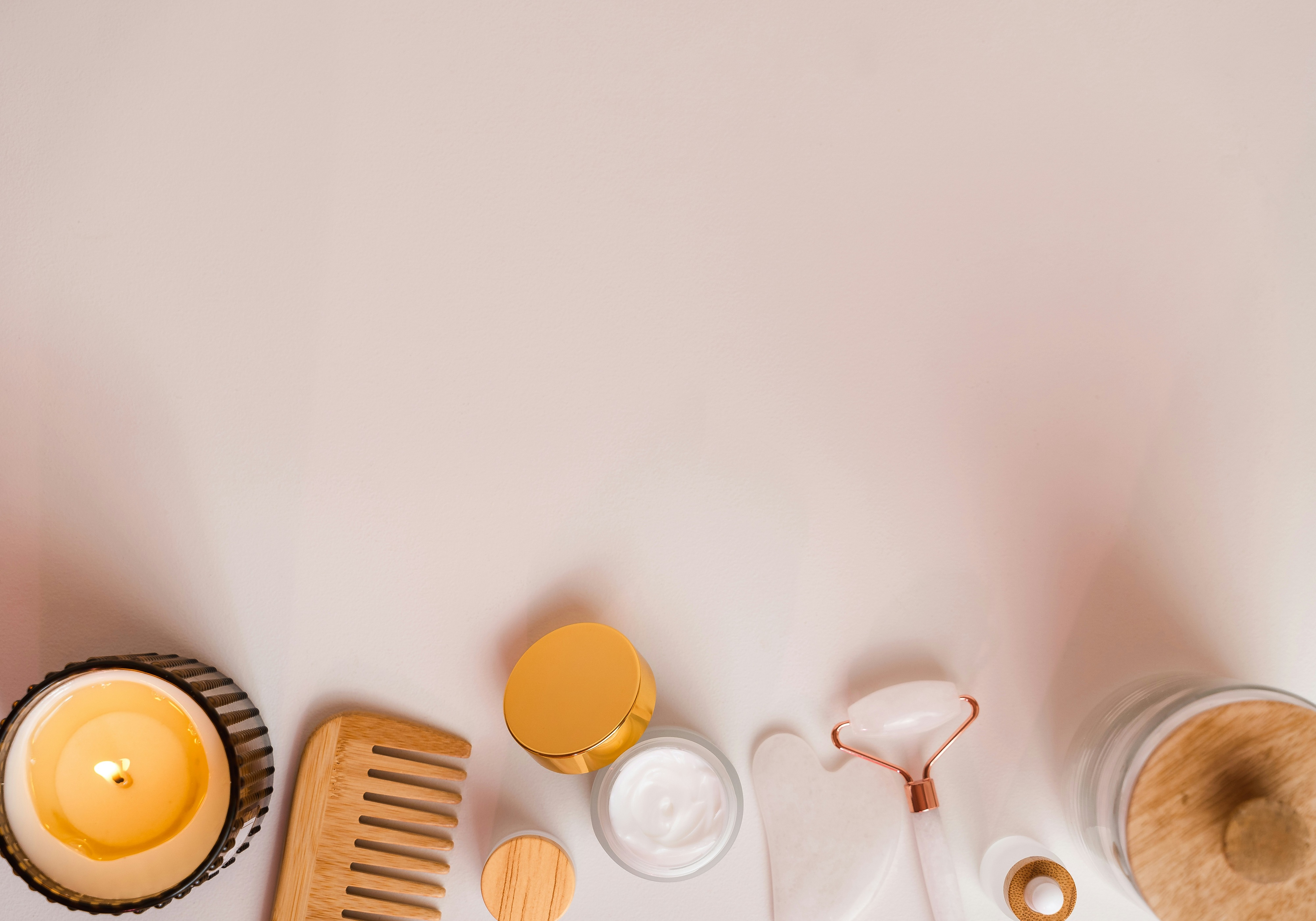
Gua sha traditionally refers both to a massage technique and the tool used to perform it: applying oil or cream to the skin, then using a handheld tool to press and glide across the face or body.
Today, however, gua sha tools are being used in more ways than ever.
On any given day, a single tool might kick off your morning by depuffing facial contours, sit beside your keyboard ready for a midday temple and scalp massage, release built-up shoulder tension by 4 PM, and soothe tight calves after an evening workout.
What was once seen primarily as a facial sculpting tool has steadily expanded its reach, stretching literally from the scalp down to the soles of the feet.
The motivation behind reaching for one has evolved, too. Beyond defining cheekbones and soothing morning puffiness, people now turn to gua sha rituals to melt away desk fatigue, stimulate hair follicles, and release deep post-workout muscle tightness.
In response, their appearances have also transformed. Today’s gua sha lineup spans far beyond traditional flat jade plates: think multi-pronged scalp massagers, ergonomic hand-gripped acupressure tools, contoured neck cradles, and wide-glide body sticks.
A gua sha is no longer just a facial beauty gadget; it has become an essential head-to-toe wellness habit. And OLIVE YOUNG is leaning right into that evolution.
The first-timer dilemma: Where do I even begin?
While there may be more options than ever, a gua sha can still feel surprisingly difficult for first-time users.
The tools come in a wide range of shapes, and many can be used on more than one part of the body. For someone unfamiliar with them, understanding where to begin is not always intuitive. In fact, when OLIVE YOUNG looked at gua sha users and non-users, one of the key reasons people hesitated to use the tool was simple: they did not know where or how to use it.
OLIVE YOUNG is approaching that challenge from a different starting point: the body part itself.
Even when a product can be used in multiple ways, the idea is to highlight the area where its particular strengths are most useful. A tool suited to scalp massage for the scalp. A product designed for acupressure for the neck and shoulders. A tool that can comfortably cover a larger surface area for the legs after exercise.
Rather than asking customers to first study the shape of a gua sha and figure out how to use it, the curation shifts the question to something more intuitive: “My neck feels stiff, so this might be for me,” or “I want to relax my scalp, so I should try this one.”
It is a small change in perspective, but one that could make a growing category much easier to navigate.
From formal routine to desk companion
One area attracting particular attention is the scalp.
Scalp gua sha is finding its way into daily life in a slightly different way. Instead of setting aside dedicated time for a massage, people may simply keep one on their desk and reach for it when their head feels heavy or when they need a quick moment to reset.
In that sense, it can become less like a tool that is deliberately taken out for a wellness routine and more like an object that is simply there when you want to use it. Much like a stress ball, a squishy toy or even a keyboard keycap that people absentmindedly fidget with throughout the day.
Products such as the Filimilli Scalp Cooling Massager are designed around that kind of everyday use, combining multiple massage points with a cooling sensation. The gua sha becomes something closer to an object that naturally invites interaction than a device reserved for the moments when you decide it is time to “take care” of yourself.
In Korea, this type of relationship with the tool has even inspired the term “companion gua sha.” It refers to a small wellness tool that stays close by and is picked up whenever it is needed.
OLIVE YOUNG is also exploring ways to make the experience a little more approachable and fun. One idea in development involves decorating octopus-shaped scalp gua sha tools with facial expressions and stickers, turning them into something akin to “gua sha customization.”
Wellness does not always have to feel serious. Sometimes, making an object cute enough to want on your desk is enough to make you reach for it more often. And through that repetition, something that began as a novelty can gradually become part of a daily routine.
Tailored contours: Matching form to function
As you move down the body, the anatomy of the ideal tool shifts to match different muscle groups.
For areas such as the temples, neck and shoulders, where people might normally press with their fingers, products like the dallu Mini Massager can offer a hand-worn approach to targeted acupressure. Meanwhile, resting tools like the SNPE Dokkaebi Hand Lymphatic Acupressure Gua Sha Massager leverage your body weight to decompress hard-to-reach neck and upper-back muscles while lying down. For larger surface areas like quads and calves, elongated tools like the Barybody Relax Stick glide smoothly to ease soreness and promote lymphatic drainage.
Facial care, meanwhile, has its own specialized tools. Products such as the CCLIME Beauty Core-Set Sculpt are designed to be rotated across different areas, including the jaw, cheeks, facial contours and eye area, applying techniques inspired by professional aesthetic care.
They may all fall under the broad category of “gua sha,” but their different shapes serve a purpose. As the places and situations in which people use these tools have diversified, the products themselves have become increasingly specialized.
A good gua sha feels different in your hand
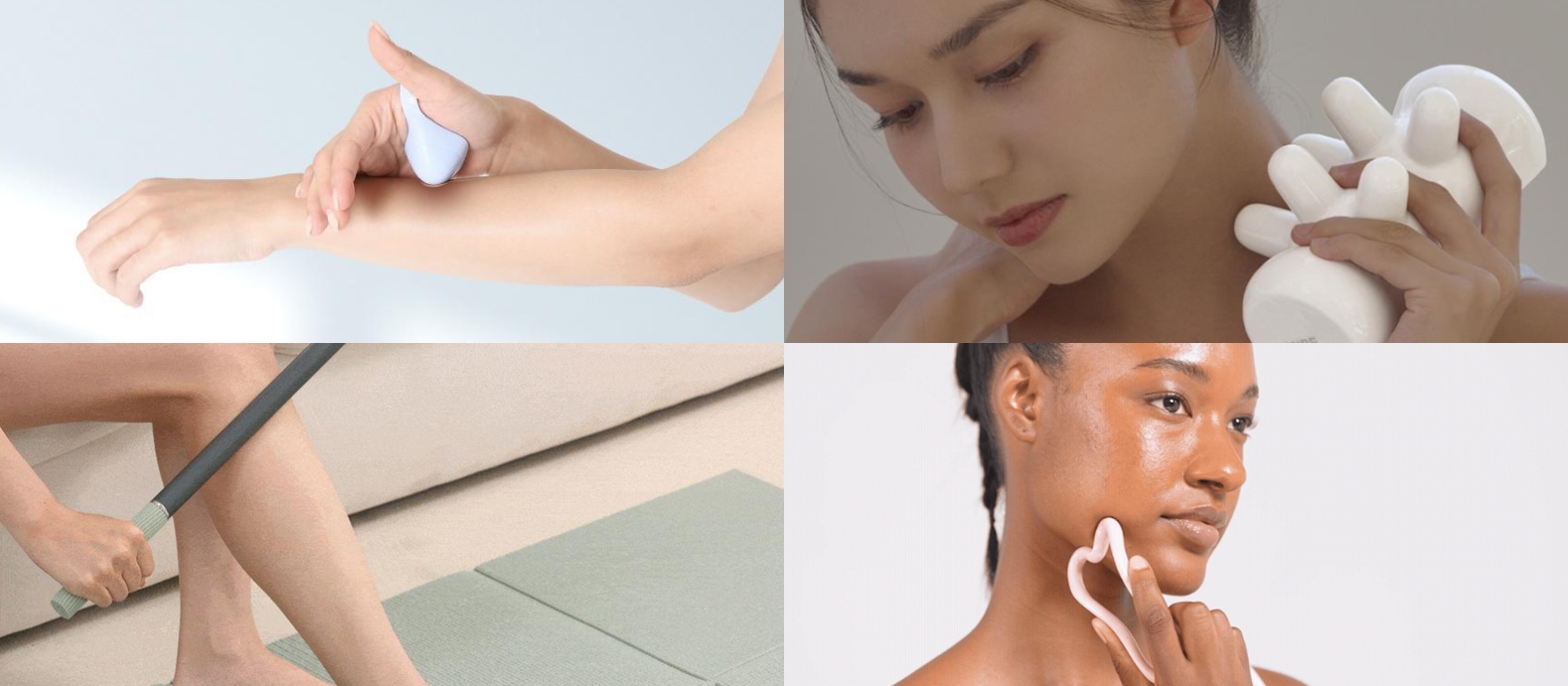
Gua sha tools can differ as much in feel as they do in appearance. Even tools designed for the same area can offer noticeably different experiences. Scalp massagers vary in the size and shape of their massage points, while facial tools can feel entirely different in the hand depending on their curves and materials.
Online reviews can make comparison easier, but some differences only become immediately clear through direct experience. That is why OLIVE YOUNG is also considering ways for customers to better understand these products by trying them for themselves.
Some stores already feature testers that allow customers to experience gua sha tools directly. Depending on store conditions, in Korea, OLIVE YOUNG is also exploring experiential formats such as a “Gua Sha Bar,” where customers could discover and try a range of tools in one place.
The goal is to create more ways to discover and choose products while making their purpose and use easier to understand.
The next chapter of gua sha is ‘body-part wellness’
OLIVE YOUNG is now looking at gua sha as part of a broader landscape of line-care and wellness products, alongside items such as compression stockings, leg massagers and other massage tools.
The key is not to limit gua sha to a single purpose.
Rather than viewing it solely as a beauty tool for managing facial contours, there is an opportunity to see it as one of many tools that can help people care for different parts of the body, depending on what they need that day: the scalp, the neck and shoulders or the body after a workout.
Going forward, OLIVE YOUNG plans to further develop its curation around the areas and situations customers want to care for, making it easier to find the right gua sha for a particular need.
Perhaps, then, the question we ask when choosing a good gua sha is beginning to change.
Instead of asking, “Which gua sha is the best,” maybe the better question is: "Where do I want to feel better today?"