A purchase every 0.9 seconds: A look inside OLIVE YOUNG stores in Korea
 13min
 AI Summary
This summary was generated by AI. Please refer to the full article for accuracy.
In August 2026, cumulative purchases by international customers at OLIVE YOUNG’s offline stores in Korea surpassed KRW 1 trillion, reaching the milestone three months earlier than in 2025. From more than 150 stores in key tourist districts to AI-powered translation in 38 languages, OLIVE YOUNG is reshaping the K-beauty shopping experience as international visitors venture beyond Seoul to Gangwon, Gyeongju and Jeonju.
In August 2026, cumulative purchases by international customers at OLIVE YOUNG’s physical stores in Korea surpassed KRW 1 trillion. Last year, the company reached the same milestone in November. This year, it arrived three months earlier.
From January through August, international customers made 11.01 million transactions. Based on store operating hours, that works out to one transaction every 0.9 seconds. Tax-refund data recorded customers from 192 countries and territories, meaning OLIVE YOUNG stores welcomed shoppers from virtually every country, with only a few exceptions where international travel is difficult.
What stands out is the pace at which these purchases have grown. What drove OLIVE YOUNG to reach this milestone three months ahead of last year?
From 2% to 33%
In 2022, international customers accounted for only about 2% of OLIVE YOUNG’s offline sales. At the time, they were still something of an exception in day-to-day store operations. That share climbed into the double digits in 2023, reached 26.4% in the first half of last year, and finally reached 33% in August 2026.
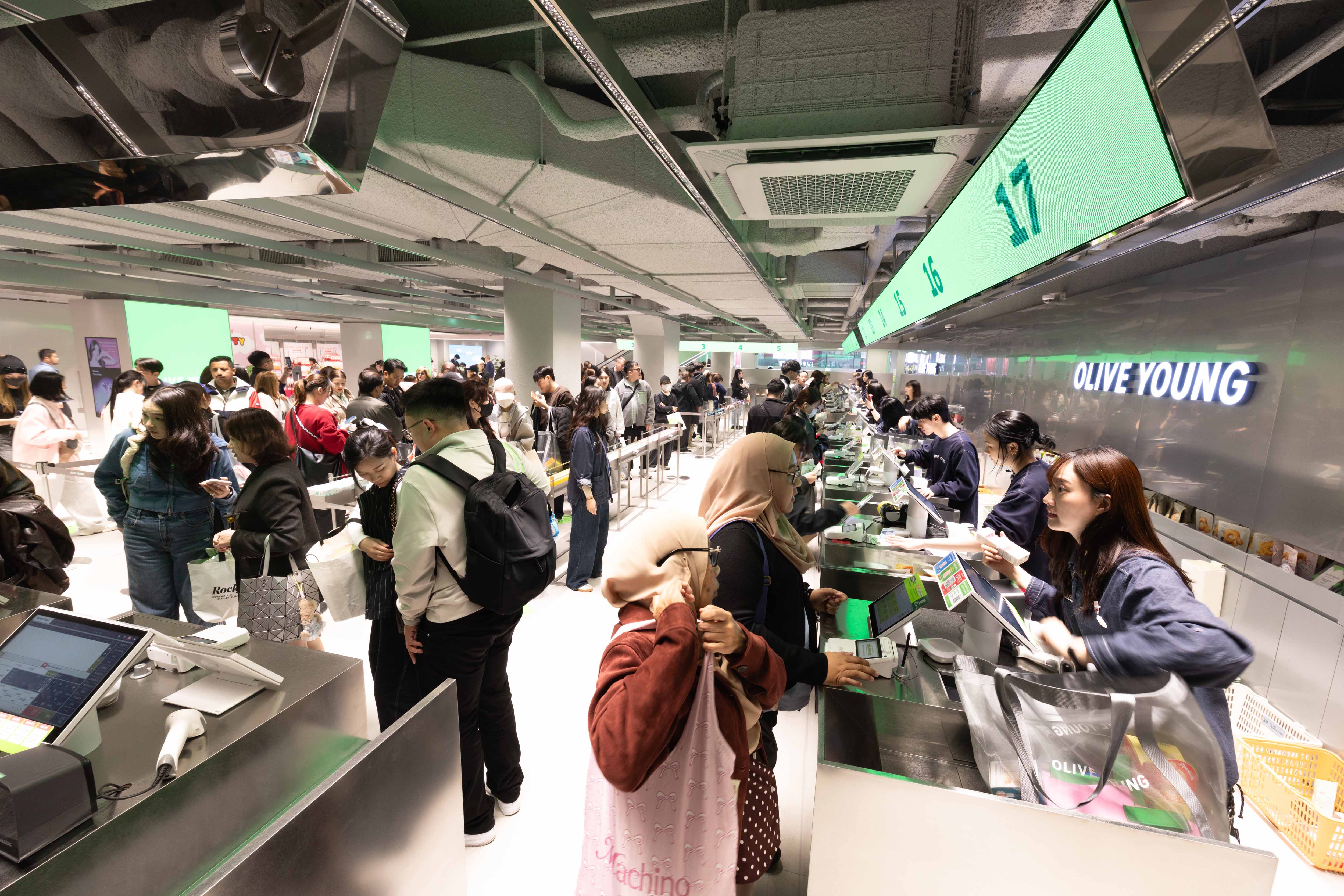
That means roughly one in every three customers checking out at OLIVE YOUNG is an international shopper. In line with the increase in global shoppers, services for international customers have also become a fundamental part of store operations. That is why OLIVE YOUNG began expanding its preparations years ago, rethinking everything from product offerings and customer service to store layouts.
Breaking down language barriers and expanding the shopping experience
The first priority was making communication easier.
In July 2023, OLIVE YOUNG developed and distributed an in-store manual for employees at more than 60 locations popular with international customers. That November, the company renovated its Myeongdong Town store into Korea’s first globally specialized store, introducing electronic shelf labels that displayed product names in both Korean and English.
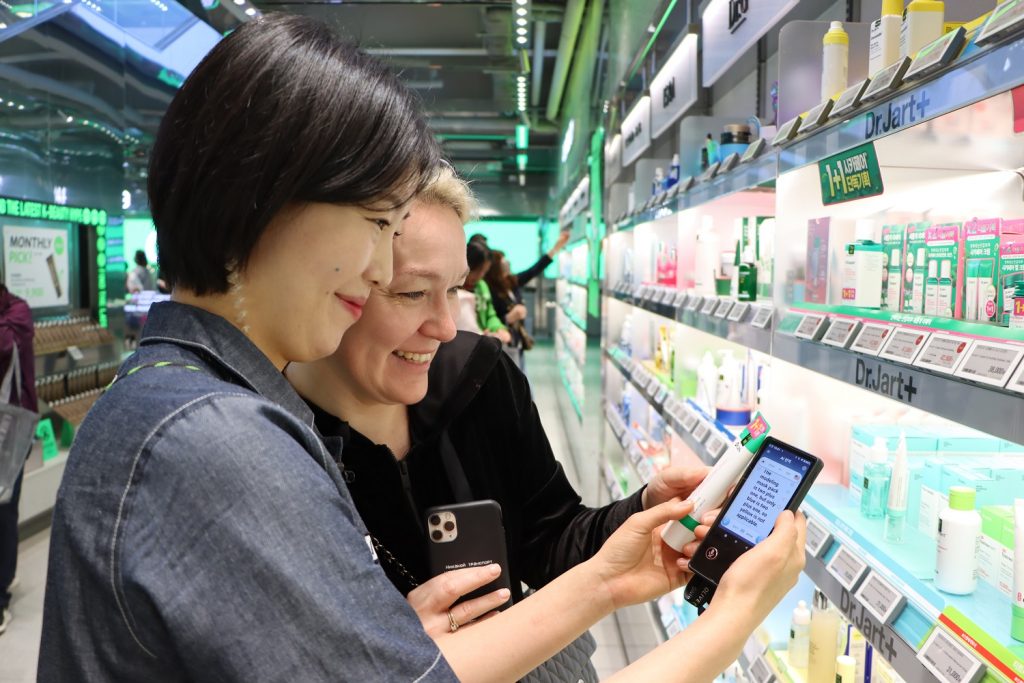
In April 2024, portable translation devices supporting real-time interpretation in 16 languages were made available across stores nationwide. The devices could also translate ingredient lists by scanning them with a camera, helping employees accurately explain ingredients that customers wanted to know more about. That same year, OLIVE YOUNG established a dedicated global customer organization and began developing products, services and store environments tailored more directly to international shoppers.
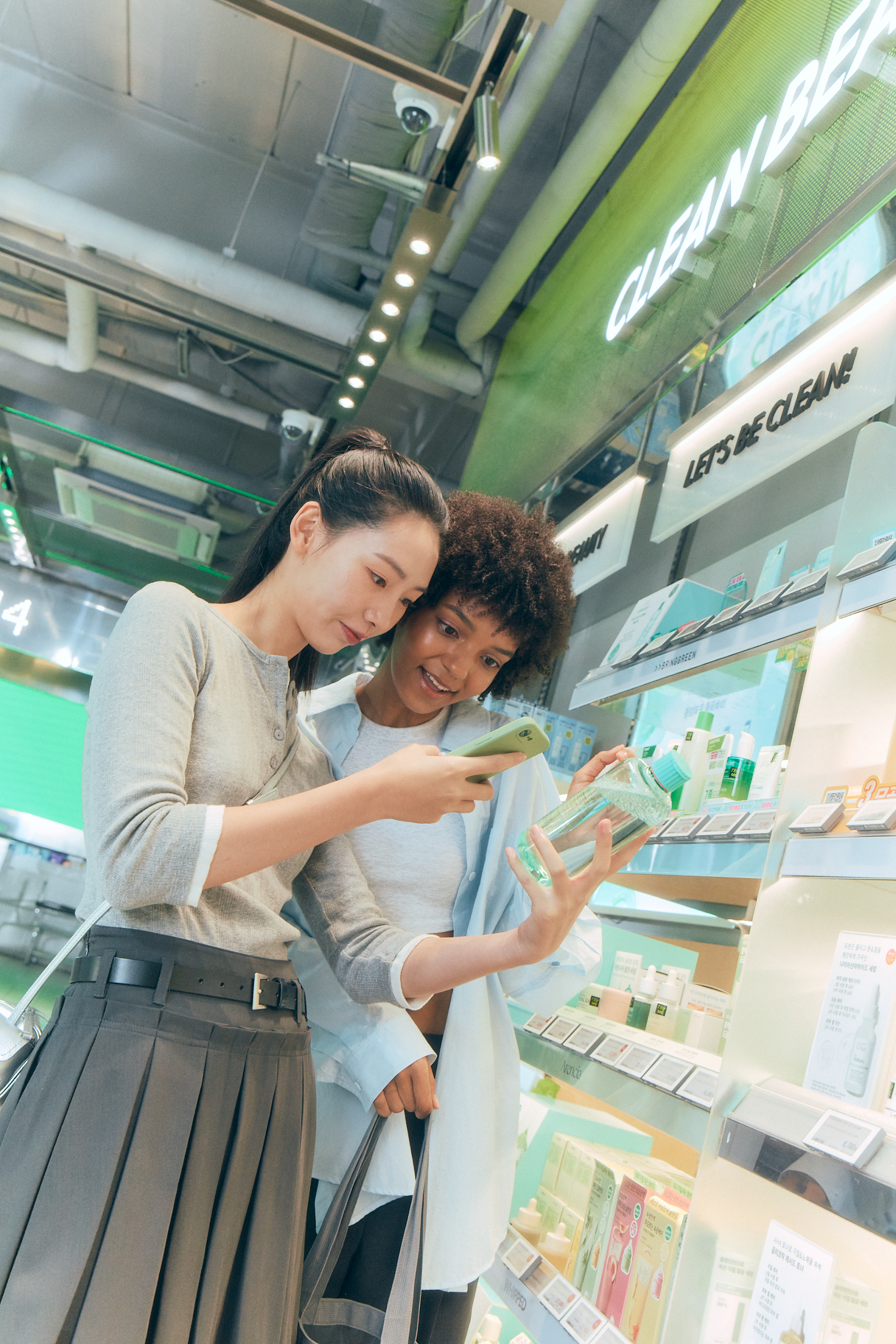
Then, in July 2026, AI arrived in stores. The AI Shopping Assistant lets customers interact with an AI avatar through a kiosk to explore product information, check inventory and in-store locations, and receive personalized product recommendations. Supporting eight languages, the service allows customers to shop without employee assistance. Meanwhile, the AI Interpretation Service, designed to facilitate conversations between customers and employees, expanded its language support to 38 languages. Trained specifically on beauty-related terminology, it enables customers to describe their skin concerns in their native language while employees provide detailed guidance on ingredients and how to use products.
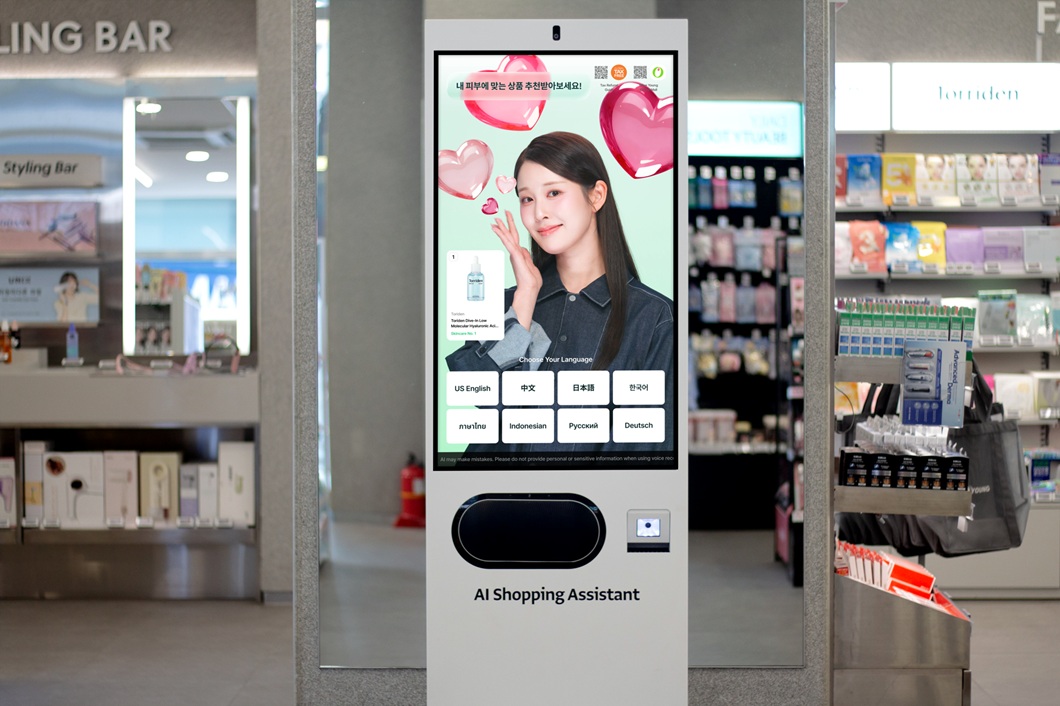
In just three years, OLIVE YOUNG has transformed the in-store experience, evolving from basic language support in 2023 to AI-powered services that make shopping more accessible to international customers.
Stores evolving around the way international customers shop
The changes have extended beyond customer service to the way stores are designed.
OLIVE YOUNG designates locations with a high proportion of international customers as global tourism district stores and manages them separately. In the mid-2010s, there were only 10 to 20 such stores. The number surpassed 135 in November 2025 and 150 in August 2026, accounting for more than 10% of all OLIVE YOUNG stores.
The operational expertise accumulated across these locations informed the development of OLIVE YOUNG Central Myeongdong Town, which opened in March this year. Spanning approximately 3,140 square meters, the store carries around 1,000 brands and 15,000 products, with its layout designed around the way international customers shop.
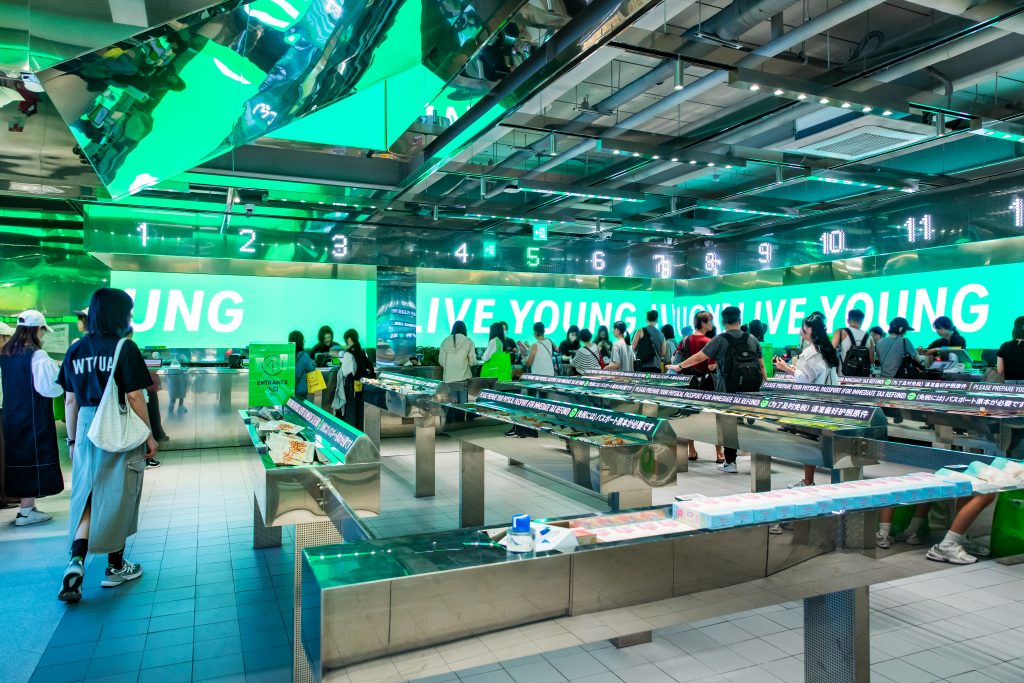
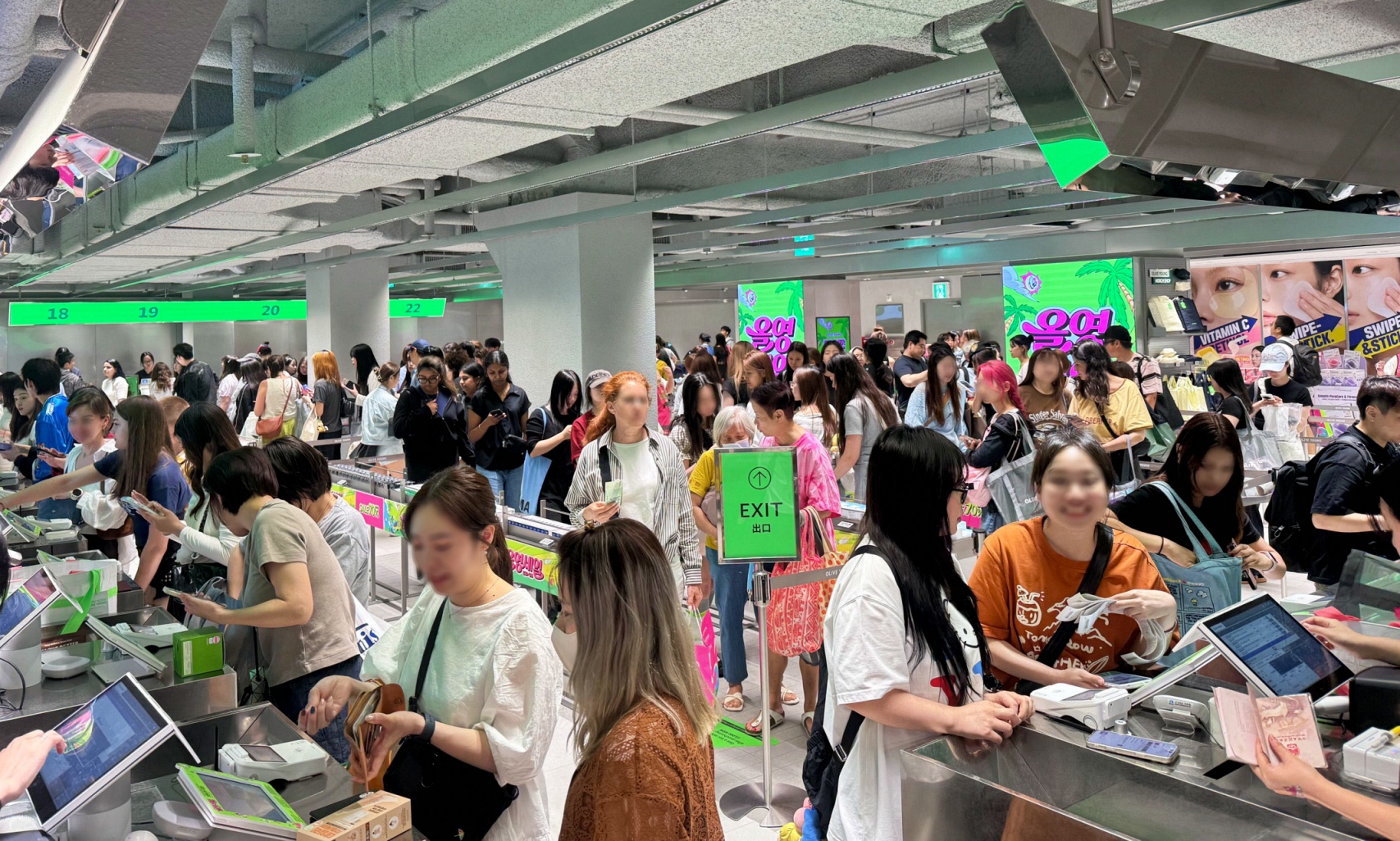
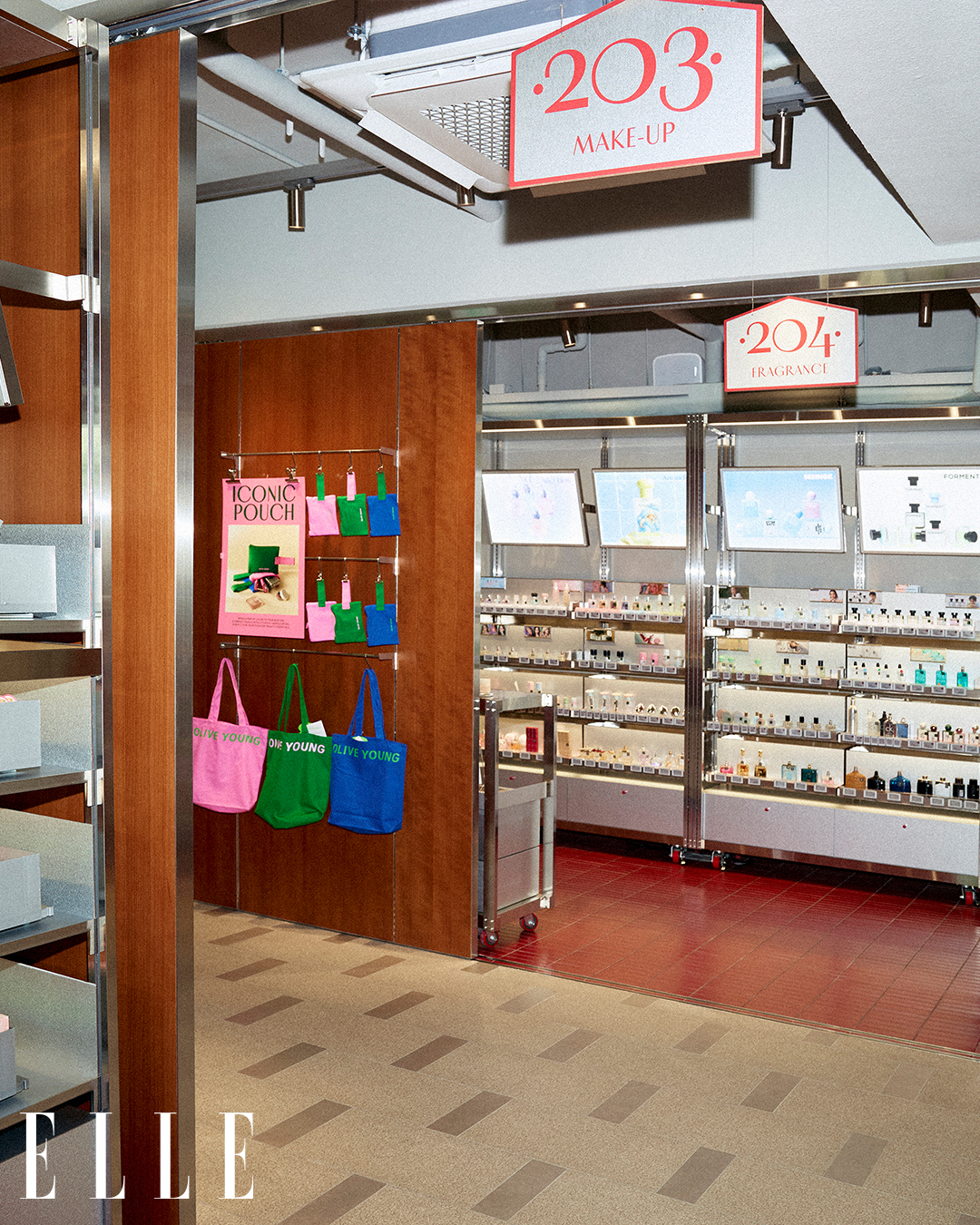
The checkout area is one example. Recognizing that international customers often make large purchases, the store features 22 staffed checkout counters. Data analysis of the process, from scanning products to payment and bagging, has helped streamline transactions and reduce checkout times. The store also features a dedicated Mask Library, bringing together more than 800 sheet mask products, one of the most popular purchases among international shoppers. In addition, beauty devices and derma cosmetics are grouped together to meet the post-treatment skincare needs of medical tourists.
Spanning approximately 2,975 square meters across four floors, it is the largest OLIVE YOUNG store outside the Seoul metropolitan area and was modeled on Central Myeongdong Town. It is also the first store outside the capital region to deploy three beauty consultants, with additional staff scheduled during daytime hours when cruise passengers are most likely to visit. The number of cruise tourists visiting Busan is projected to rise from 257,000 last year to 990,000 this year.
From Seoul to Gangwon, Gyeongju and Jeonju
One of the most notable shifts in this year's data is how far international customers are traveling beyond Seoul.
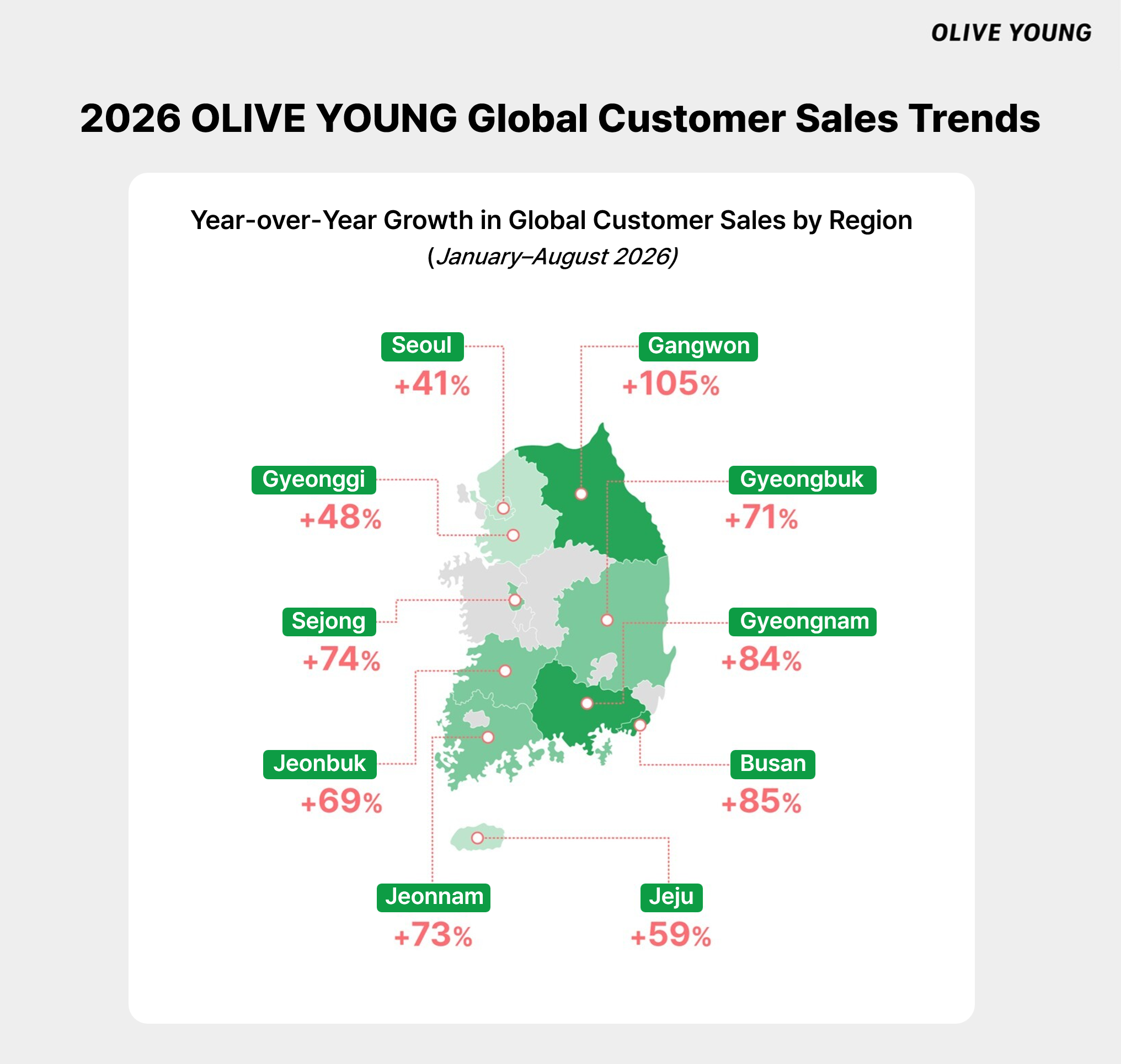
From January through August, sales to international customers rose 47% year over year nationwide. In Gangwon Province, however, sales surged 105%. Growth in Gyeongju (88%), Daejeon (80%) and Jeonju (62%), which were destinations traditionally associated more with tourism among locals, also far outpaced the national average.
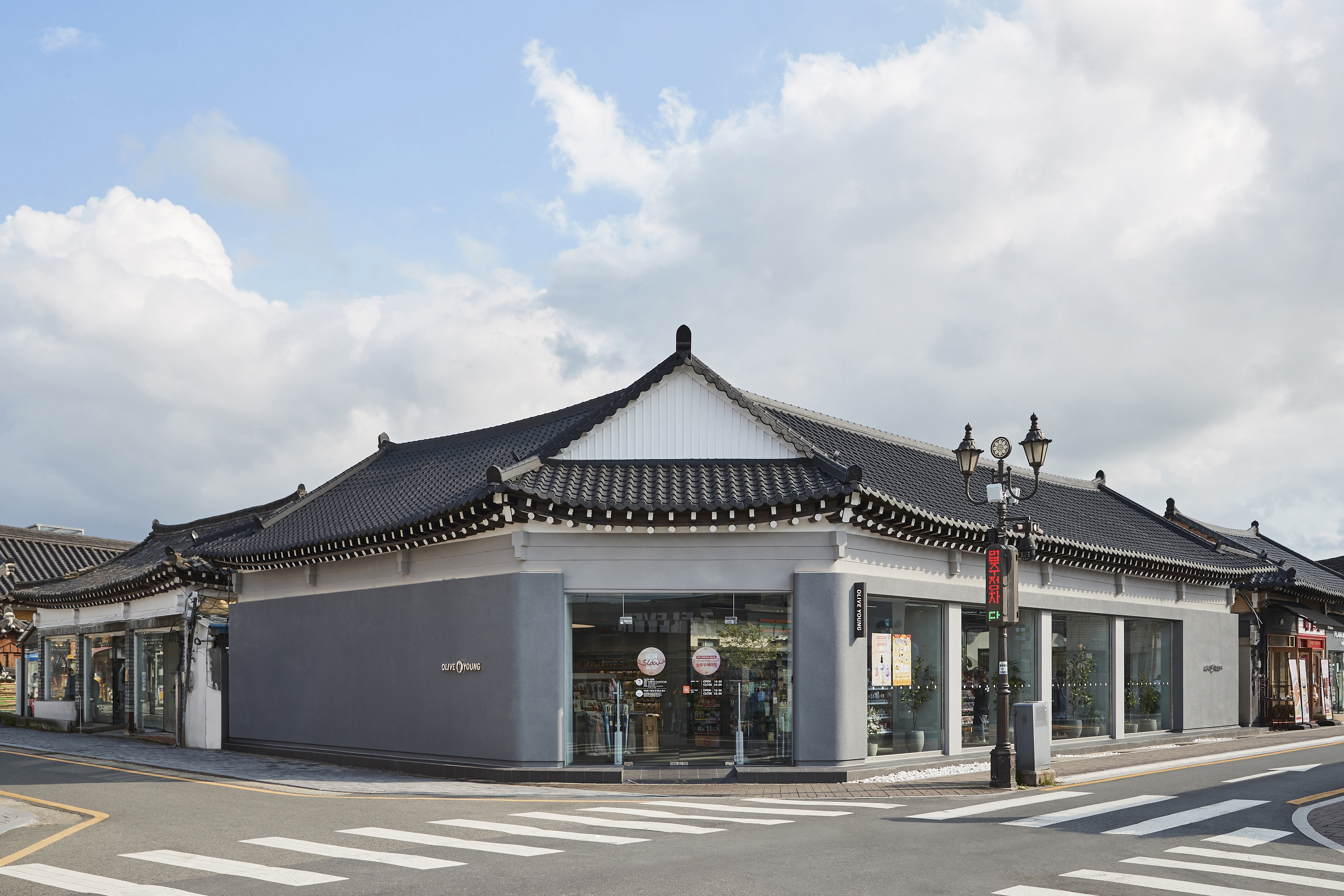
The diversity of international visitors to these regional stores has grown as well. In Gangwon, customers came from 85 countries this year, up from 76 last year. In Gyeongju, the number rose from 88 to 100.
The way international customers move between stores is equally interesting. In an internal survey conducted in May this year among international shoppers visiting OLIVE YOUNG’s global tourism district stores, respondents reported visiting an average of 2.8 stores per person. Rather than completing their shopping in one location, they move between stores in different areas along their travel routes, in a pattern resembling a shopping stamp tour.
This trend also reflects OLIVE YOUNG's efforts to expand large-format Town stores and locally themed specialty stores outside the Seoul metropolitan area. The company's investment in regional locations reached KRW 123.8 billion this year, more than three times the amount invested in 2023. OLIVE YOUNG Millac the Market, which opened in Busan at the end of August, takes its inspiration from a fictional vessel called "Olyoung-ho," docked at Millak Port, recreating the atmosphere of a waterfront seafood market.
As each store develops its own distinctive character, stopping by OLIVE YOUNG is increasingly becoming part of the travel itinerary itself.
A broader basket of K-beauty finds
What international customers buy in Korea is changing, too.
This year, international customers purchased an average of six products per transaction, and more than one in three (35%) spent over KRW 100,000 in a single purchase. By category, skincare, color cosmetics and haircare ranked among the most popular.
Sales of K-dermo skincare, which draws on dermatological science, increased 78% year over year. Inner beauty products grew 64%. Hand care products, popular as gifts and travel souvenirs, now generate 40% of total category sales from international customers.
The shift from K-beauty toward K-wellness is also continuing. At OLIVE BETTER, a wellness curation platform launched this year, international customers account for more than 40% of sales.
The experience continues after the flight home
That is what is happening inside the stores. But K-beauty shopping does not end at the departure gate.
Since 2019, OLIVE YOUNG has operated OLIVE YOUNG Global, a cross-border e-commerce platform serving customers in more than 150 countries and territories. In the first half of last year, sales increased 70% year over year, while order volume rose 60%. Membership surpassed 3.35 million. The number of brands available on the platform grew more than ninefold, from 130 in 2019 to approximately 1,200.
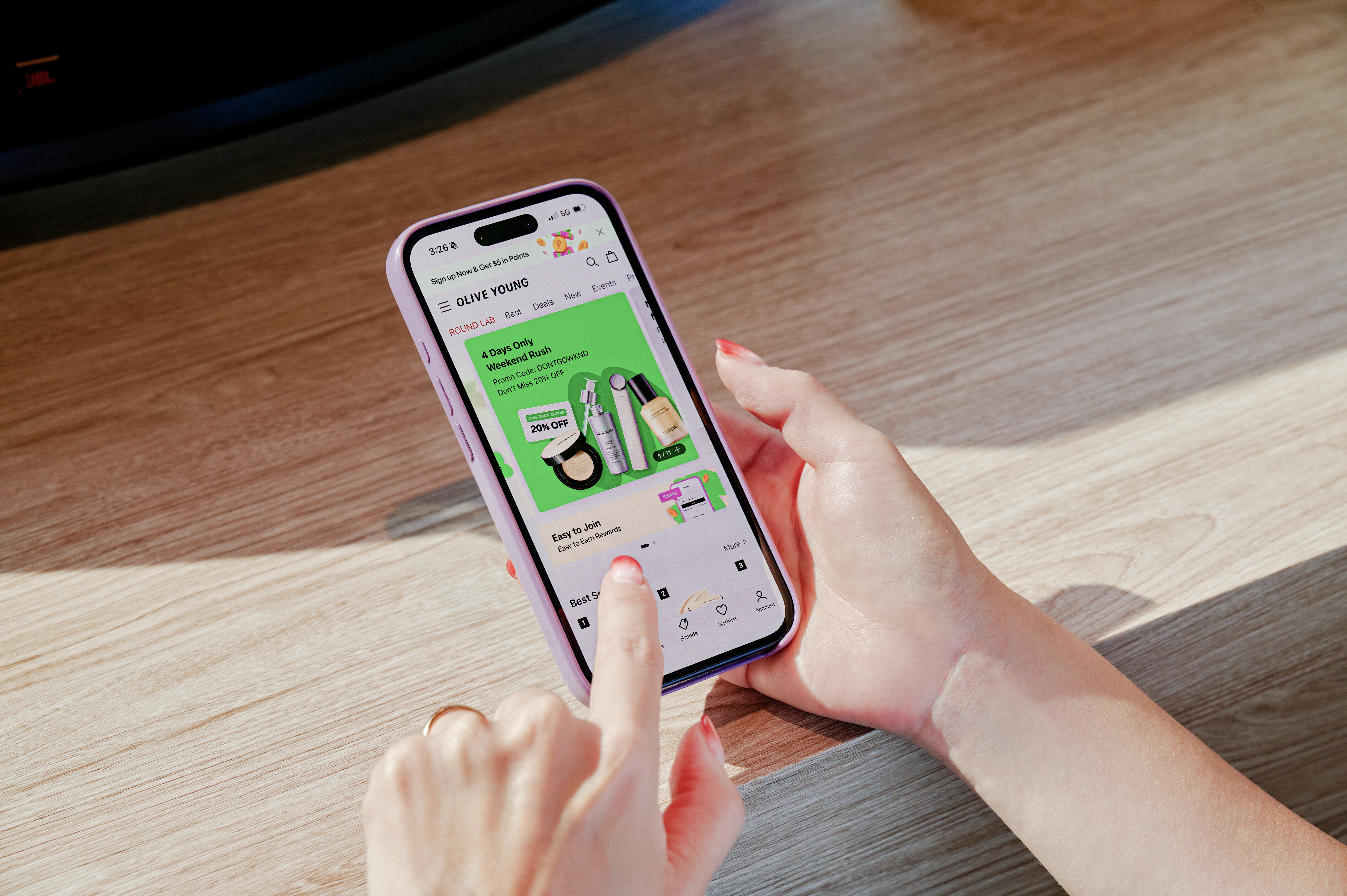
One of the links between the stores in Korea and OLIVE YOUNG Global is a membership sign-up vending machine installed at major locations. Approximately 30% of new OLIVE YOUNG Global members sign up through these machines. They provide a bridge for customers who discover OLIVE YOUNG in Korea to continue shopping for K-beauty after returning home.
The momentum has continued this year. During the June O.Y Sale, OLIVE YOUNG Global traffic increased by more than 180% compared with the same period last year. Customers who could not travel to Korea were able to join the sale online at the same time.
Returning to Korea for the next O.Y Sale
There are also signs that customers who have visited once are coming back.
The number of international customers who traveled to Korea for both the March and June O.Y Sale events this year was 11 times higher than three years ago. Last year, more than 6,200 international customers returned to Korea at least three times in time for the sales.
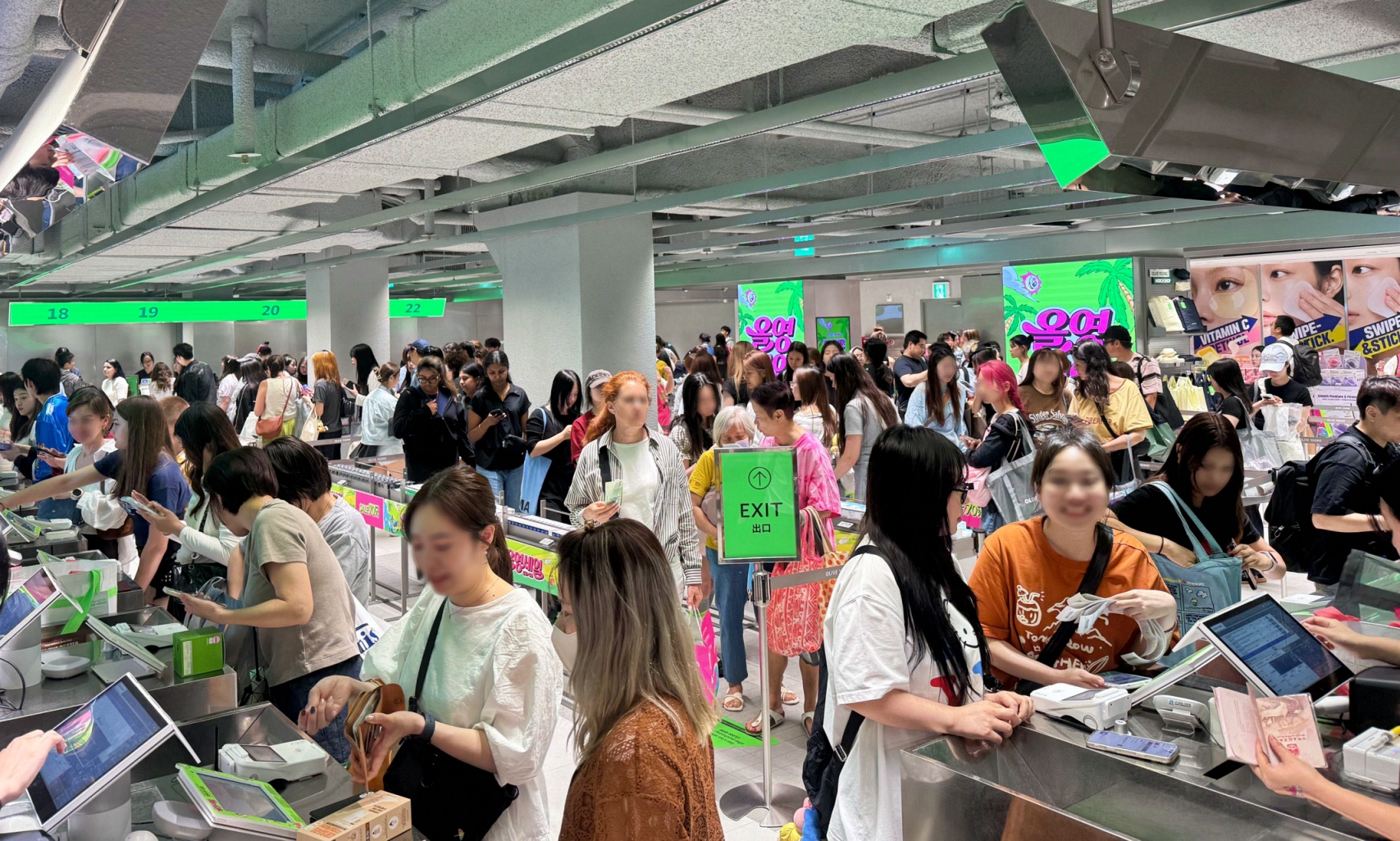
These patterns help explain why OLIVE YOUNG reached KRW 1 trillion in international purchases three months earlier than last year. Customers enjoyed their in-store experience, found that the products lived up to expectations once they tried them at home, and began planning their next trip around the following sale.
The customers driving this growth encounter domestic small and independent brands first and foremost. These brands account for more than 80% of the products sold at OLIVE YOUNG, gaining exposure to consumers from around 190 countries simply by earning a place on its shelves. The number of brands carried by OLIVE YOUNG that surpassed KRW 10 billion in annual sales grew from 36 in 2020 to 116 last year, with international customers playing a role in that growth.
A purchase every 0.9 seconds. Behind those 11.01 million transactions are countless individual experiences: someone discovering an independent Korean brand that is difficult to find at home; someone explaining their skin concerns in their native language and receiving a personalized recommendation; someone adding OLIVE YOUNG to their Busan itinerary; someone boarding another flight to Korea for the next O.Y Sale.
Taken together, these experiences point to a bigger shift: OLIVE YOUNG is becoming more than a place to shop for K-beauty. For an increasing number of visitors, it is part of what makes a trip to Korea worth taking, and a reason to return.