From network design to remote operations, how OLIVE YOUNG connected its U.S. stores through the cloud
 11min
 AI Summary
This summary was generated by AI. Please refer to the full article for accuracy.
OLIVE YOUNG’s Tech Platform Center developed a standardized, cloud-based network using Cloudflare WAN to connect its U.S. stores and online store while enabling centralized management from Seoul. Before launch, the SRE Team recreated U.S. network routes and simulated outages in a Seoul testing lab to verify reliability and prepare incident-response procedures.
Inside the development of OLIVE YOUNG’s global network, unveiled at OLIVE YOUNG’s 2026 Tech Conference
Every time a store employee checks inventory on a handheld device or a customer searches for and orders a product online, data travels between devices and systems. The communications infrastructure that makes this possible is known as a network.
“How should we design a network to ensure the reliable operation of our U.S. stores and online store?” For OLIVE YOUNG’s Tech Platform Center, this was the question that set everything in motion.
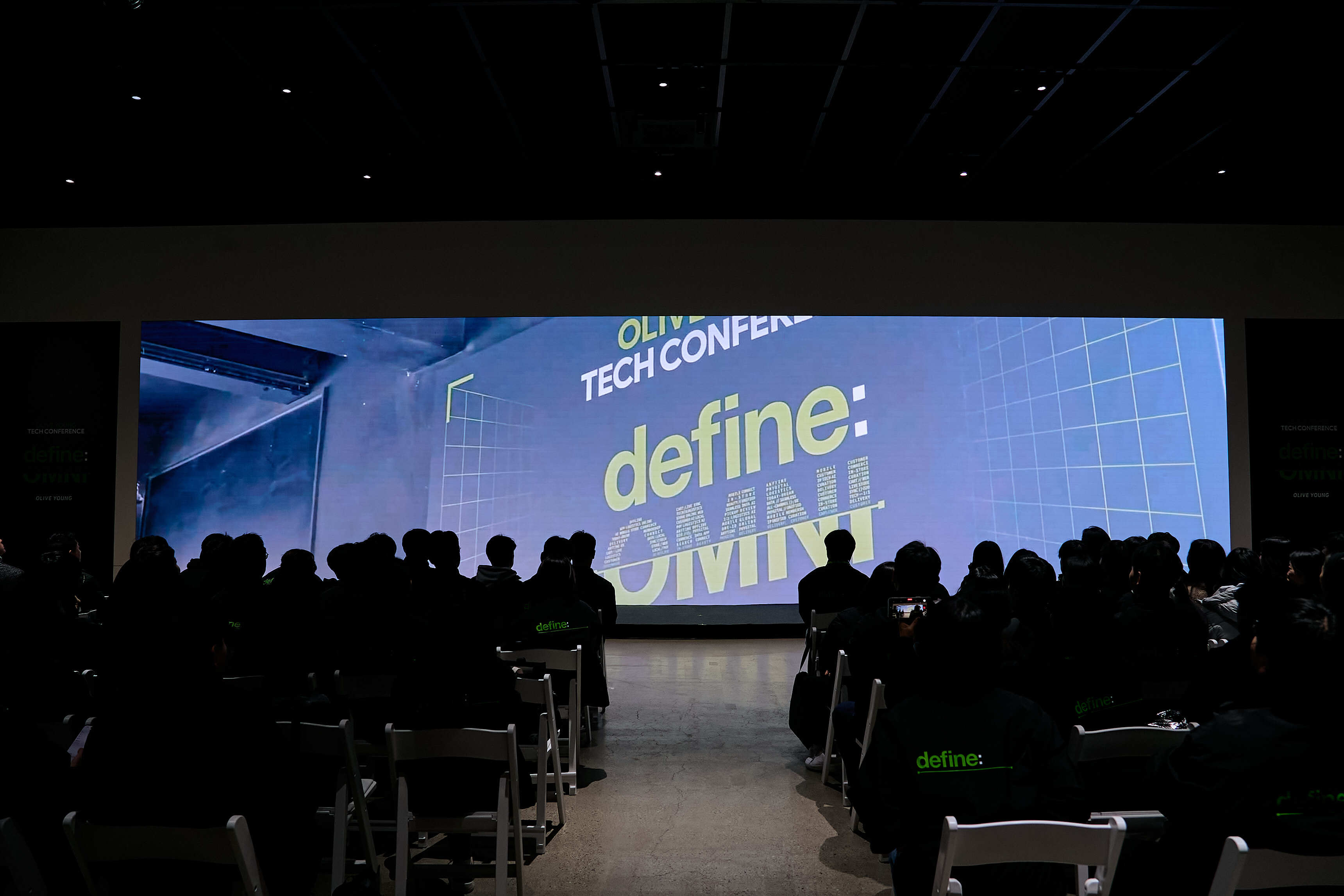
Since establishing a dedicated technology organization in 2021, OLIVE YOUNG has expanded its technology workforce 6.8-fold over five years. Drawing on 27 years of retail experience and expertise accumulated through operating approximately 1,300 stores and an online store in Korea, the company took on a new challenge in the United States: building a reliable network connecting its U.S. stores and online store, while enabling its engineers in Seoul to manage the network remotely even after the stores opened.
It was an undertaking with few precedents, both in Korea and internationally. Ahead of the U.S. launch, the Tech Platform Center recreated the network routes that data would travel in the United States within a testing environment in Seoul, verifying how store systems would perform before welcoming their first customers.
At OLIVE YOUNG’s tech conference, Minseok Oh, an engineer on the Site Reliability Engineering (SRE) Team within the Tech Platform Center, shared the story behind the development of this global network.
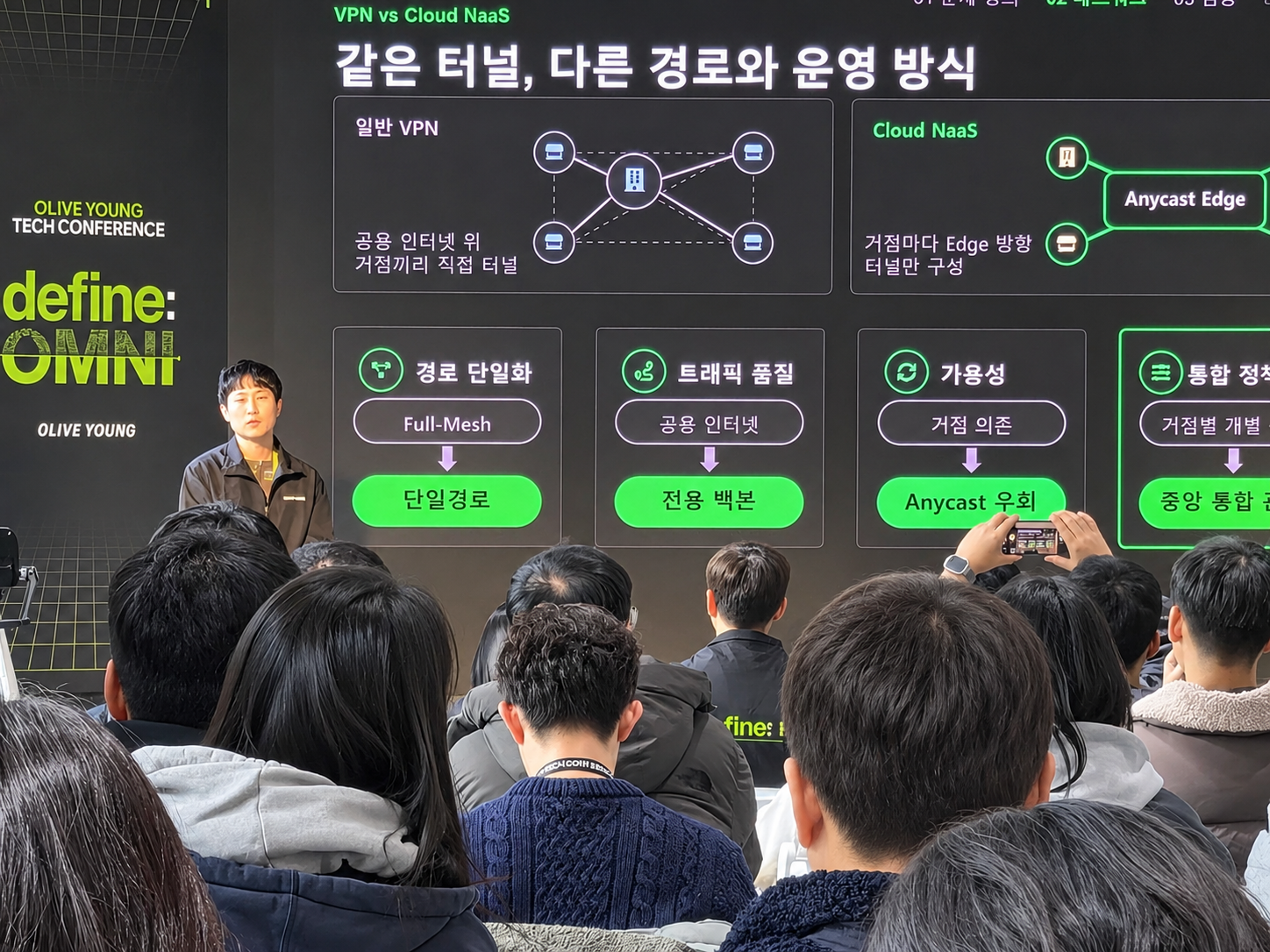
A veteran engineer with 15 years of experience, including previous experience as a developer at a cryptocurrency exchange, Oh saw OLIVE YOUNG’s U.S. expansion as an opportunity to build on his infrastructure expertise and explore how networks could play a greater role in supporting business operations on a global scale.
Q. What role did the SRE Team play in preparing for the U.S. launch?
SRE stands for Site Reliability Engineering, a discipline focused on designing and operating systems to ensure that services remain reliable. The team prepares systems to handle sudden surges in online traffic, monitors their performance to identify and respond to issues quickly, and continuously improves infrastructure and operational technologies based on insights gained through day-to-day operations. Ultimately, its role is to strengthen the reliability of the OLIVE YOUNG platform.
Ahead of the U.S. launch, the team recreated the network routes that would be used by local stores within a testing environment in Seoul. This allowed the team to verify in advance whether employees could reliably access the systems required for daily store operations through those connections.
Q. Network preparations began a year before the U.S. stores and online store opened. What was the team's first consideration?
In Korea, OLIVE YOUNG has successfully operated an omnichannel platform in which its extensive store network and online store are interconnected in real time. Maintaining reliable online and offline systems amid rapid business growth was already a significant challenge. The U.S. expansion introduced another layer of complexity: ensuring the same level of reliability in a different telecommunications environment.
“How should we design a network to ensure the reliable operation of our U.S. stores and online store?” was the first question the SRE Team asked as preparations for the U.S. launch got underway.
OLIVE YOUNG currently operates two physical stores and an online store in the United States, with plans to open five additional locations by the first half of 2027.
Under a conventional networking approach, each new store would require the installation of complex and costly dedicated MPLS network connections. With telecommunications environments varying from country to country, establishing these connections could take several months, making costs difficult to predict and potentially creating a significant bottleneck for future global expansion. From an engineer’s perspective, inspecting equipment or adjusting network configurations after a store opened could also require traveling to the location in person.
Rather than designing a network solely for OLIVE YOUNG’s first U.S. store, Oh began developing a standardized network strategy that could be readily applied to future locations around the world.
The goal was to establish an infrastructure that could be deployed quickly and consistently, regardless of the country or local operating environment, while allowing geographically dispersed locations to be managed centrally.
Q. What made OLIVE YOUNG’s Korea-first network configuration different?
The Tech Platform Center turned to Cloudflare, a company that provides enterprise networking and security services through a globally distributed network. OLIVE YOUNG adopted Cloudflare WAN, a service that connects geographically dispersed stores and business systems through a cloud-based network while enabling network configurations across multiple locations to be managed centrally.
The initiative marked an important technological shift in brick-and-mortar retail, demonstrating how traditional network infrastructure built around physical connections and on-site equipment could transition to the cloud.
Previously, securing local telecommunications connections and installing equipment for a new retail store could take months, with costs often difficult to anticipate. By overcoming these physical constraints, OLIVE YOUNG successfully demonstrated the viability of global cloud-based Network-as-a-Service (NaaS) in a real-world retail environment.
With no domestic precedent to draw upon, the SRE Team tested multiple configurations to determine whether the technology could meet OLIVE YOUNG’s operational requirements.
Following extensive validation, OLIVE YOUNG became the first in Korea to adopt this particular network configuration, applying it to its U.S. store operations. In doing so, the company established an integrated infrastructure and operational framework designed to support rapid expansion into future global markets and centralized network governance.
Q. Once the network configuration was determined, why did the team test the U.S. store network in Seoul?
A system that works seamlessly in Korea may respond more slowly or experience unstable connections when accessed from a store in the United States. In some cases, it may not be accessible at all. The distance and routes that data travels differ, and the condition of local Internet Service Provider (ISP) networks can also affect performance.
To account for these variables, Oh and his colleagues on the SRE Team established a dedicated testing lab in Seoul. By configuring data to travel through network hubs in the United States, they recreated the routes that would be used when accessing systems from actual U.S. stores.
The team also simulated sudden internet outages to determine whether critical sales and payment systems could continue operating when connectivity was disrupted.
The testing process revealed areas for improvement in preparation for day-to-day store operations. The team examined whether monitoring connections at multiple points could help detect abnormalities quickly, who should be the first to respond when an issue arose, and when it should be escalated to other personnel.
Before the stores welcomed their first customers, the team was already working to minimize the risk of network disruptions bringing store operations to a halt, while establishing procedures for responding to potential incidents.

Q. What did this challenge mean to the team?
Introducing a new approach to network infrastructure, where reliability is paramount, is no small undertaking. Yet Oh and his colleagues on the SRE Team challenged conventional assumptions about physical infrastructure and took the lead in developing a flexible, cloud-based global network strategy.
Moving beyond the traditional role of establishing and maintaining network connections, the team demonstrated how network infrastructure could actively enable a business to expand globally with greater agility.
For Oh, the experience of exploring an uncharted path, rigorously validating a new approach and bringing it into real-world operations marked an important turning point in his career. It was an opportunity to broaden his technical horizons while establishing a new standard for infrastructure management.
Following his session at the tech conference, numerous attendees approached Oh to ask how the network had been configured and what the team had tested before implementing it in stores. What began with a question about how to connect overseas stores had become a case study for other companies to learn from.
Embracing new ideas and rigorously validating them at every stage, from the initial preparations for a store opening to its day-to-day operations, is a reflection of how OLIVE YOUNG works, as demonstrated by the SRE Team throughout the company’s U.S. expansion.