Beyond street food: OLIVE YOUNG brings modern twist to a historic Korean market
 8min
8min
For decades, visitors have flocked to Gwangjang Market, one of Seoul's oldest and most famous traditional marketplaces, for sizzling mung bean pancakes, fresh street food, vintage textiles, and family-run shops that have operated for generations.
Today, a very different kind of green sign is drawing crowds.
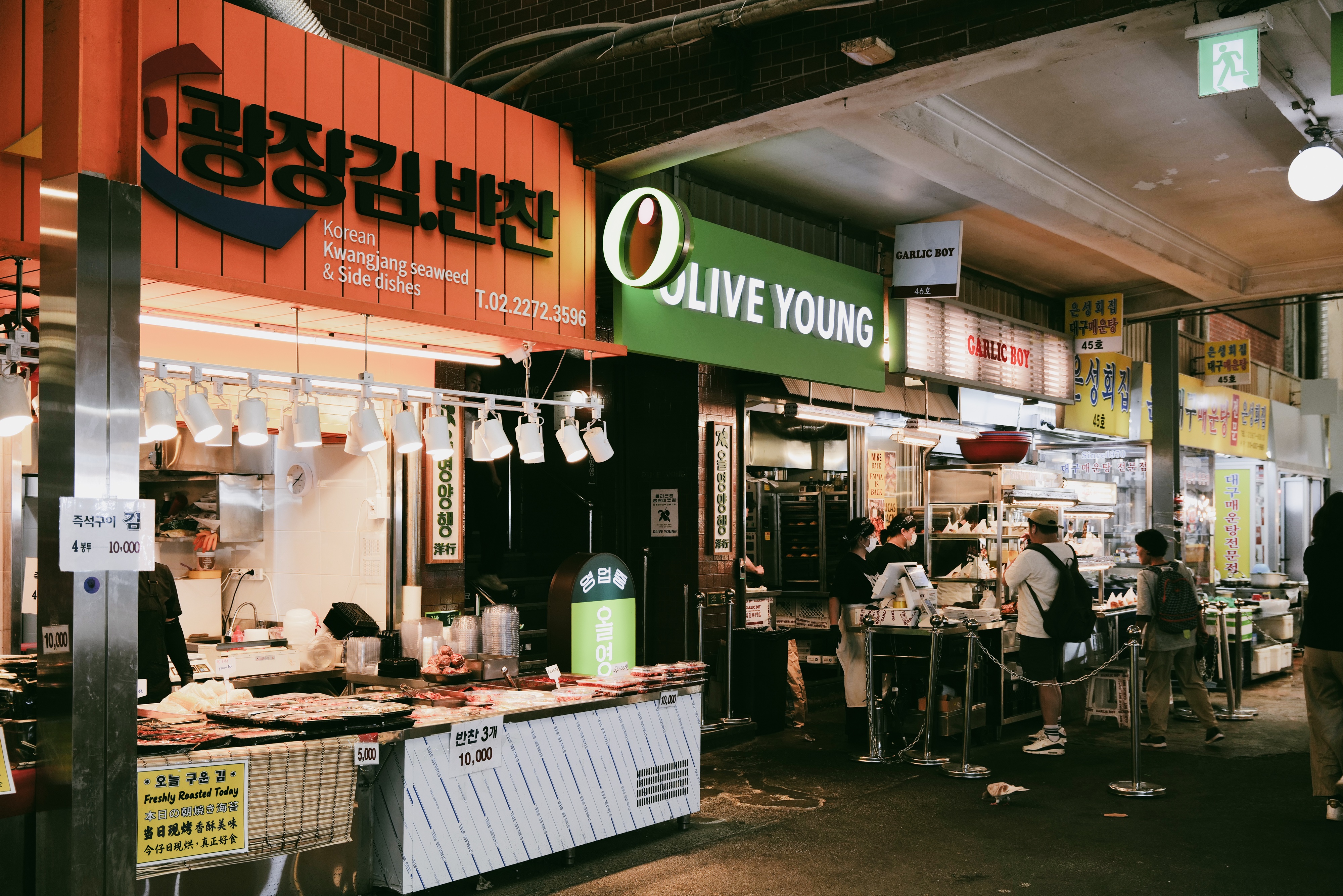
Tucked between food stalls and fabric merchants is OLIVE YOUNG Gwangjang Market, a one-of-a-kind concept store that blends Korea's leading beauty retailer with the atmosphere of a 120-year-old marketplace. At first glance, the pairing might seem unexpected. But the vision behind it was simple: bring new energy to the historic space while becoming a natural part of it, rather than replacing it.
The market's new must-see stop
Until recently, one of the most common questions vendors heard was, "Where can I find the famous mung bean pancakes?"
Now, there's another: "Where's the OLIVE YOUNG?"
Since opening its doors in April 2026, the store has quickly become a top destination for both locals and international tourists. Today, it’s a common sight to see visitors grabbing a bite to eat before heading upstairs to shop for cosmetics, or browsing the skincare aisles before getting lost in the market's maze of food vendors and longtime family businesses.
Rather than pulling business away from the market, the store has seamlessly integrated into the visitor experience. It's created an entirely new itinerary where K-food and K-beauty are experienced side by side.
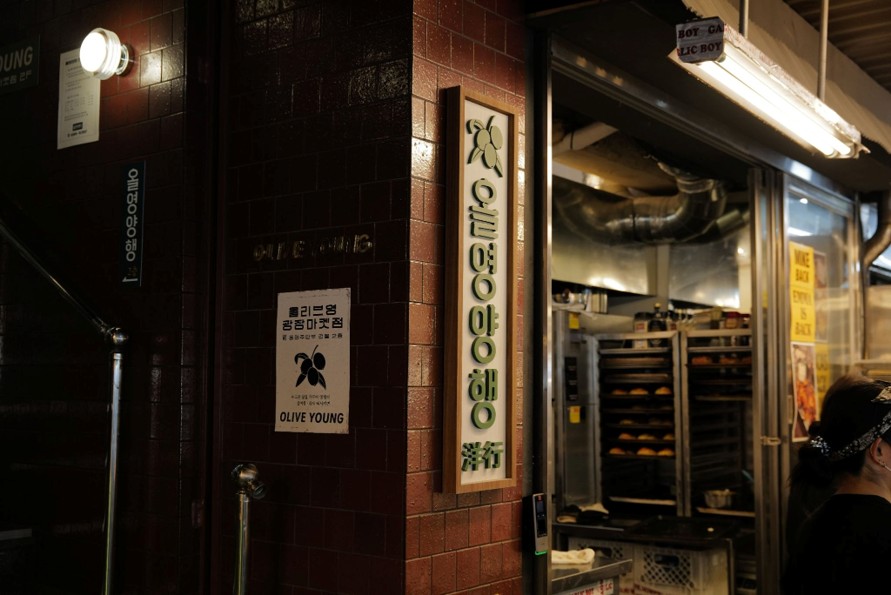
Breathing life into vacant spaces
The store took over a space that had sat vacant following shifts in the market's historic textile district. According to Lee Bu-young, president of the Gwangjang Market Merchants' Association, bringing in a major brand like OLIVE YOUNG has helped revitalize the entire surrounding area.
“We're seeing a lot more young people visiting after hearing about the store,” Lee says. “They walk around the market, stop by OLIVE YOUNG, and then keep exploring, or vice versa. International tourists are doing the same thing. You can really feel a surge of energy throughout the market.”
The store was intentionally designed to complement its neighbors. It doesn't sell the market's signature food items, and its layout naturally encourages shoppers to wander through the surrounding local businesses before and after they visit.
For the merchants, the biggest change isn't just in foot traffic: it's the atmosphere. Visitors are lingering longer, walking further into the market, and discovering shops they might have otherwise walked right past.
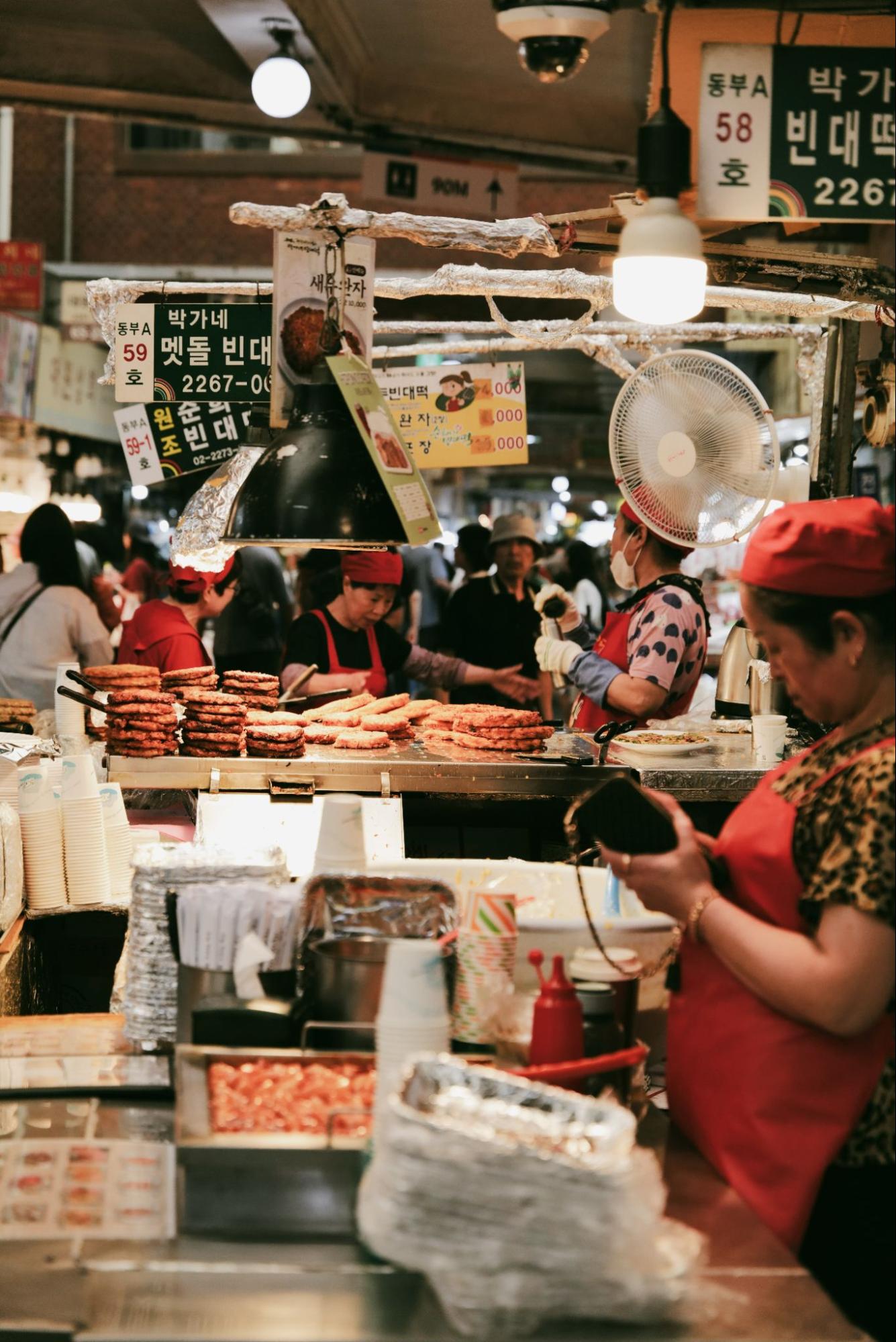
Skincare meets street food
For Lee Do-yeon, the head store manager at OLIVE YOUNG Gwangjang Market, the most exciting shift is how visitors are engaging with the broader neighborhood.
"In the past, people came to Gwangjang Market strictly for the food or the textiles," she notes. "Now, tourists are organically adding a K-beauty run to their trip."
Already a massive draw for global travelers, Gwangjang Market has expanded its reputation. It’s no longer just a street food hub; it’s a place to experience a wider slice of modern Korean culture.
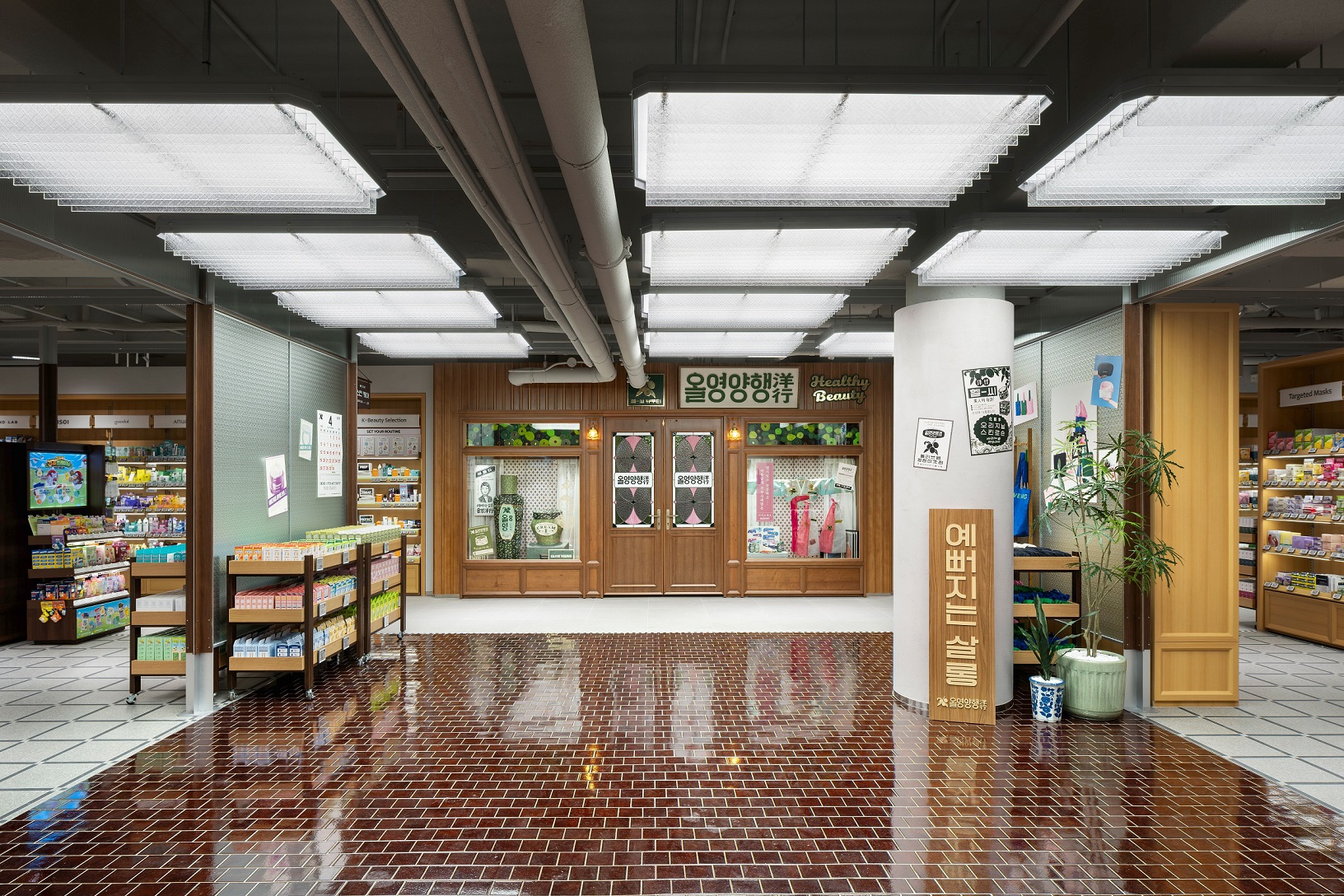
While the store’s foot traffic is an even split between Korean and international visitors, roughly 80% of its sales come from non-Korean customers, a testament to the exploding global demand for K-beauty. Local merchants are feeling the ripple effect, noting that tourists frequently ask them for directions to OLIVE YOUNG and end up spending more time exploring the aisles as a result.
Winning over the neighborhood
Before opening, the OLIVE YOUNG team shared one major concern: Could a modern retail giant naturally fit into a marketplace where vendors have worked for decades?
During construction, the team personally visited neighboring stall owners to explain the project and thank them for their patience. On opening day, they honored a longstanding Korean tradition by handing out rice cakes to neighboring merchants as a gesture of goodwill and celebration.
The community's response exceeded all expectations.
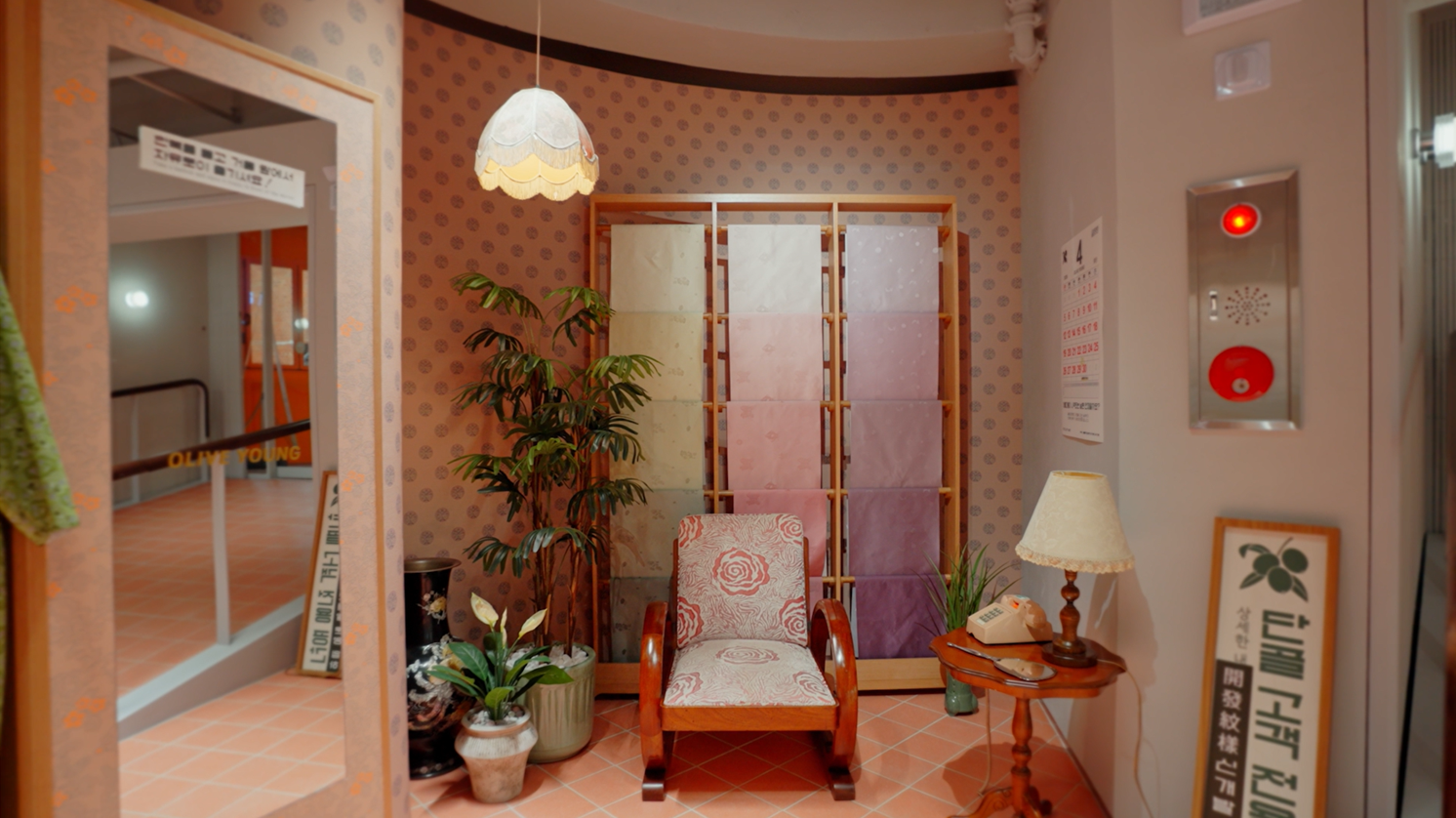
Textile merchants were thrilled to learn that the store's design was actually inspired by their district. Vintage objects and fabrics sourced directly from the market are woven into the store’s interior. Even the interactive displays, like a personal color consultation space inspired by traditional Korean fabrics, pay homage to the neighborhood's heritage.
Vendors have also noticed a surprising trend: more tourists are finally venturing upstairs to the textile district, an area that many visitors used to skip entirely.
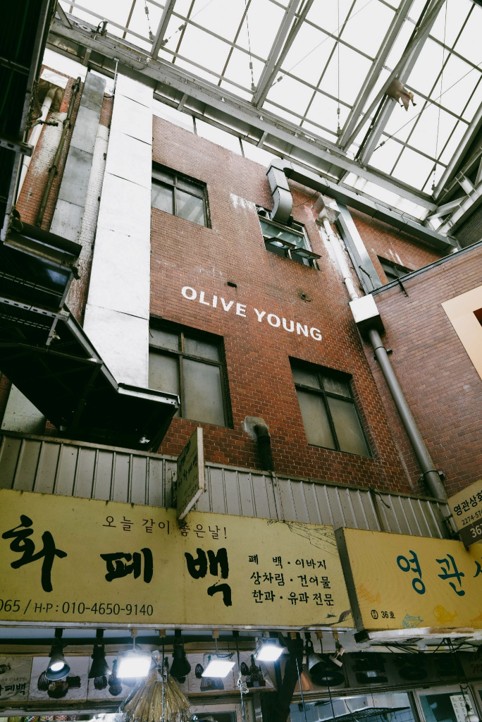
One merchant, who has run a traditional wedding gift shop in the market for over 50 years, summed it up perfectly: "When a recognizable brand like OLIVE YOUNG moves in, the smaller businesses benefit too. It gives people one more reason to come back."
Not your average beauty store
When the doors first opened, the team had some worries that customers might not even recognize the storefront.
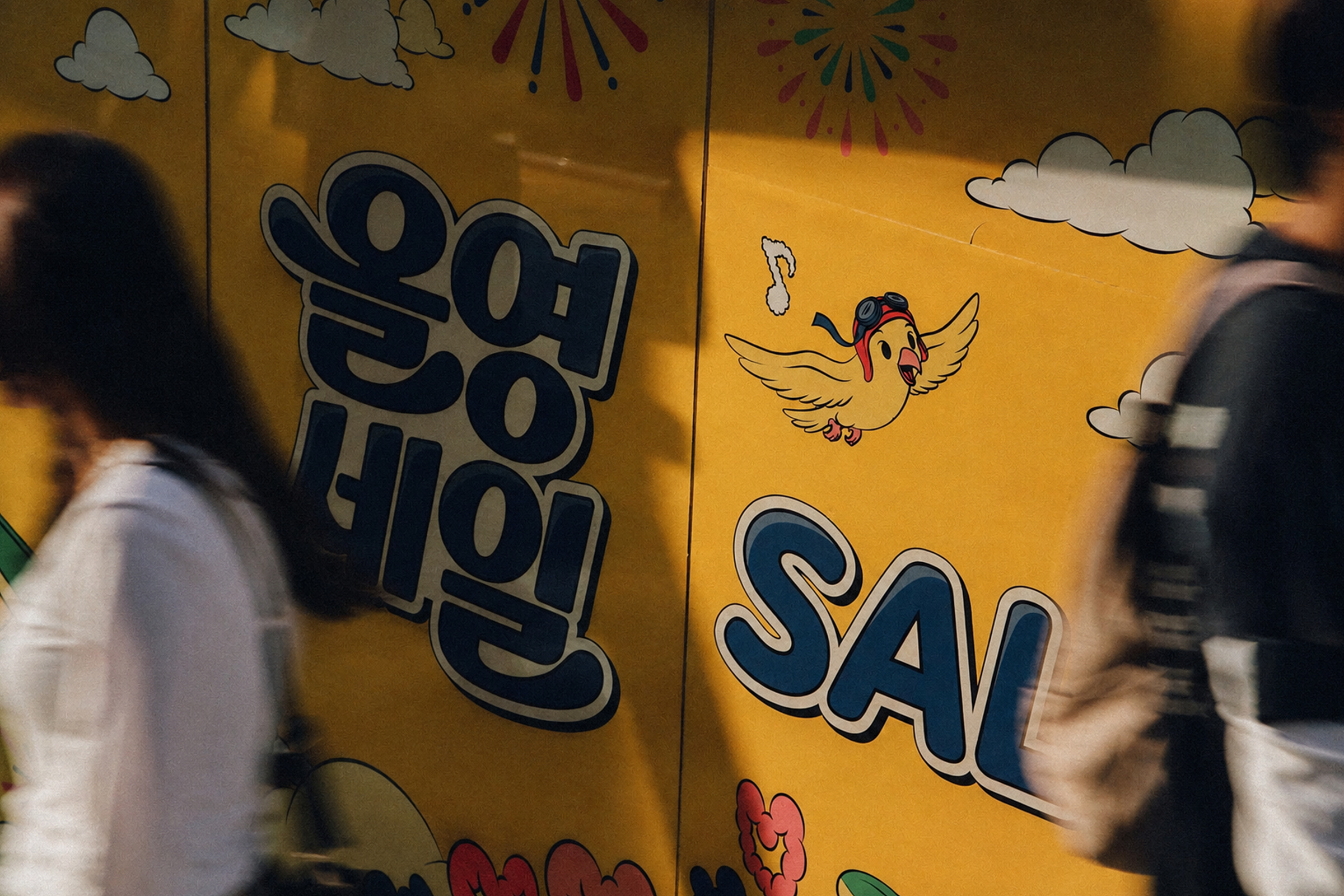
Unlike standard OLIVE YOUNG locations, the exterior features retro-style signage designed to blend seamlessly with the historic surroundings. Tucked away on the second floor, the interior intentionally steps away from the brand's modern aesthetic.
Those concerns vanished almost immediately. Shoppers flooded Instagram, travel blogs, and TikTok with videos of the space, dubbing it "the OLIVE YOUNG you have to visit."
With interactive features like a stamp tour, instant photo printing, retro photo ops, and hands-on beauty testing, the store is built for lingering. It wasn't long before the team started hearing exactly what they had hoped for: "This isn't like any other OLIVE YOUNG."
The concept was a runaway hit, with daily sales surpassing KRW 100 million (approximately $70,000 USD) during peak days.
A fresh chapter for an old classic
For generations, Gwangjang Market has been a place to eat, shop, and soak in everyday Korean life.
Today, visitors can grab a hot mung bean pancake from a decades-old stall, run their hands over traditional silks, chat with a third-generation shop owner, and discover the latest viral K-beauty serums, all in a single afternoon.
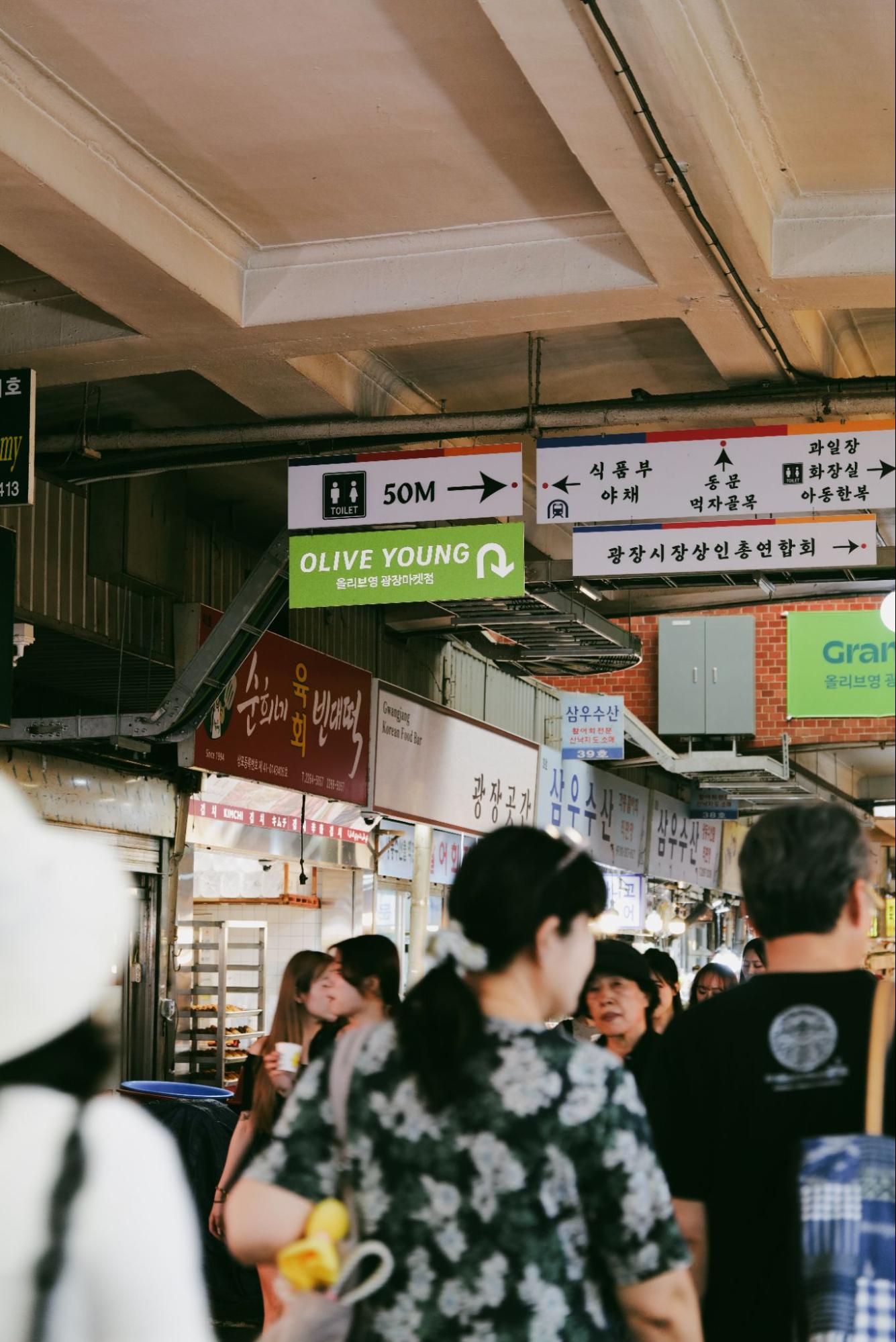
Just two months after opening, merchants consistently describe the biggest change in the same way: The market feels younger.
Putting an OLIVE YOUNG next to Seoul's most iconic street food stalls may have seemed like a gamble at first. Today, it’s hard to imagine the market without it.